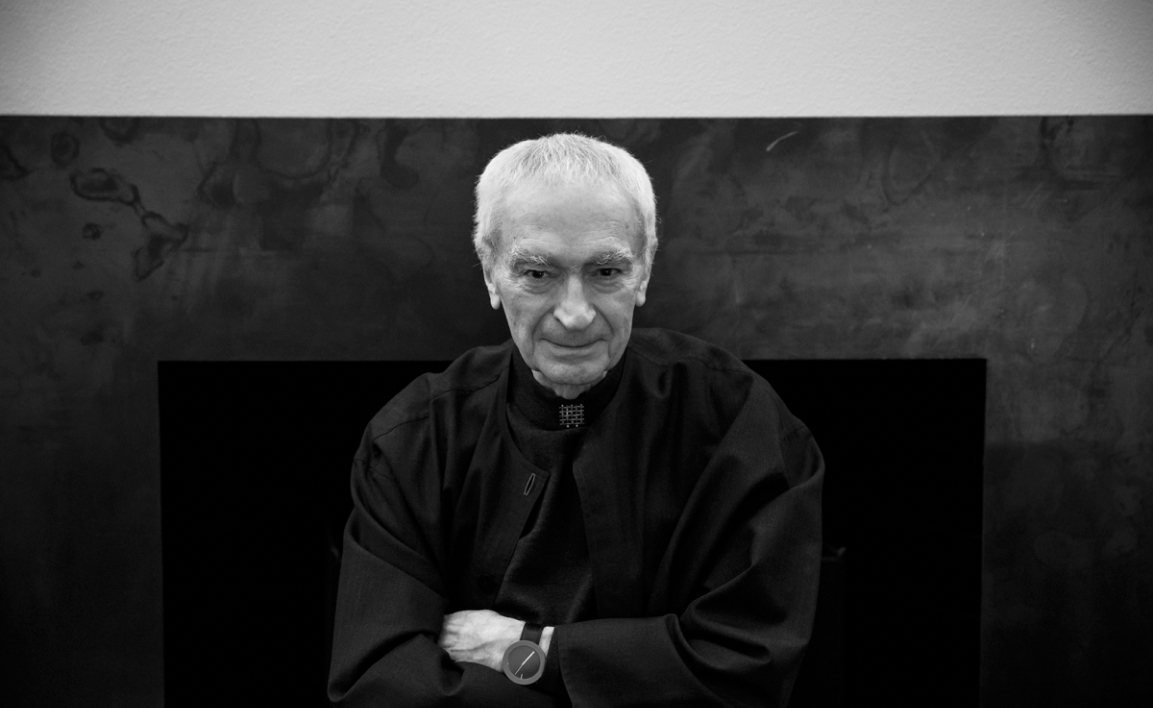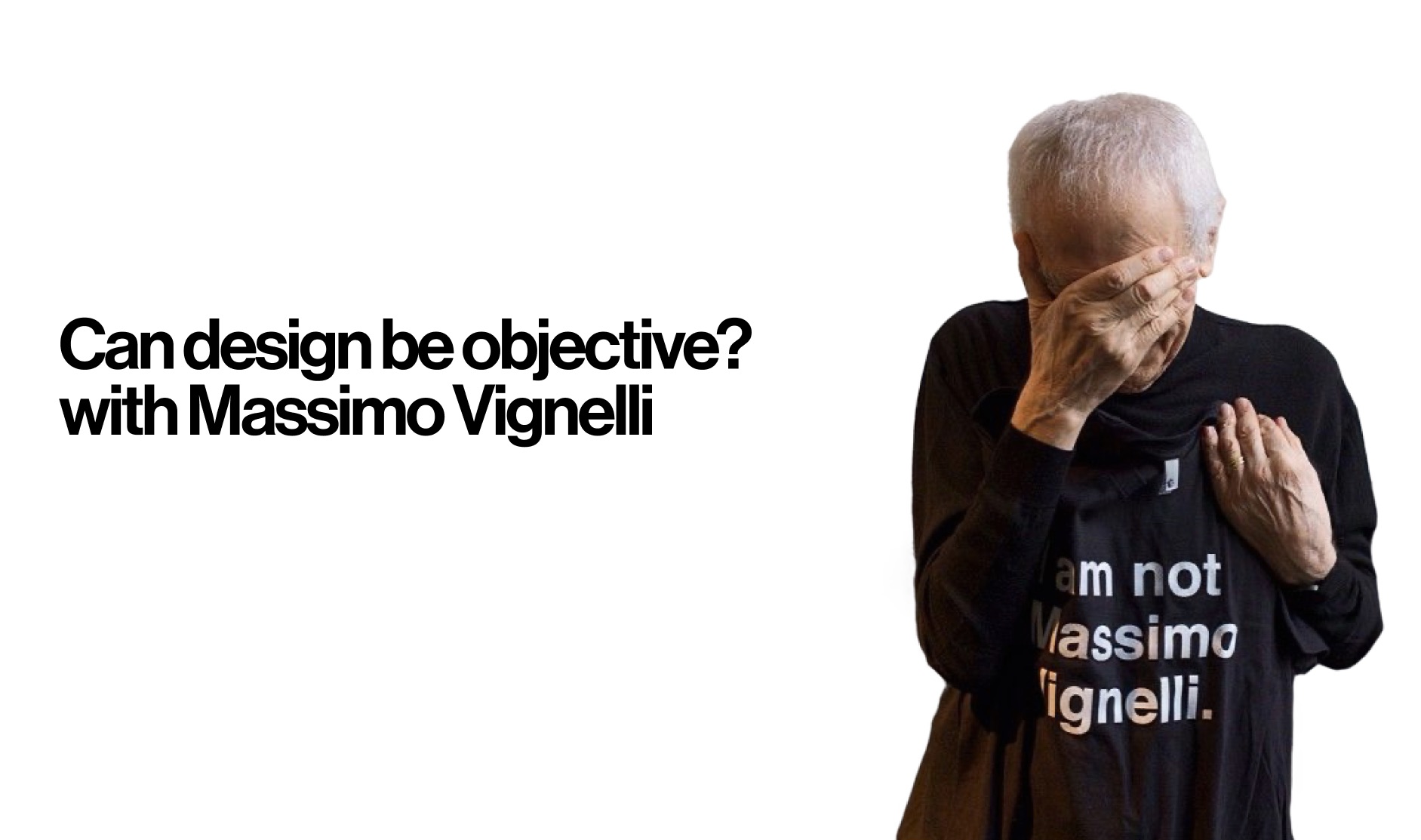
Massimo Vignelli is a giant amongst the design world. He is often remembered for his simple yet sharp, minimalistic style. Vignelli held a deep love for structure and simplicity and it is shown greatly within his work. His philosophy for design is deeply rooted in modernist principles, the nature of which begs the question of whether or not design can or even should be objective.
Design typically will rely heavily on cultural influences and personal expression, however Vignelli likes to suggest the existence of universal truths within design. Truths based upon function, timelessness and clarity. He proposes that these truths take priority over subjective taste and that functionality reigns supreme amongst design. This essay aims to tackle this very idea that Vignelli champions so passionately. To discover if design can be objective.
Born in 1931, Vignelli was heavily influenced by the Bauhaus school and The International Typographic style, more commonly known as Swiss style. These influences placed great value on structure, clarity and simplicity in design. It was here that Vignelli derived his modernist approach toward design, rejecting unnecessary frills and embracing rationality.
Vignelli once said "If you can design one thing, you can design everything." This quote really encapsulates his belief that design is governed by universal rules that transcend design.
For Vignelli design was not an art form, driven by emotion and personal expression, but rather a discipline, governed by logic and order. Like many before him, Vignelli viewed design to be a tool for communication, where in a designer's role is to communicate information clearly and effectively. This is a stark contrast to the subjective nature of art, where emotion often takes priority and rationality holds little power. Vignelli’s desire always resided with the user, prioritising functionality to allow for a better user experience.
Vignelli’s philosophy encompassed a lot, but the idea that he could create objective designs held great weight. Design to Vignelli did not lay within personal preference or emotional resonance but rather the result of understanding the principles that make up design, the principles transcend taste and trends. Vignelli upheld practices such as grid systems, limited use of colour and typographic disciplines to create functional designs that were aesthetically pleasing.
Vignelli’s use of Helvetica is a prime example of this. He thought highly of Helvetica for its neutrality and more importantly its clarity. Helvetica is objective. It is objectively clean, geometric and lacks any sort of flair that might introduce any bias or personal preference. By using such assets Vignelli believed that designers could create works that communicate with one another universally, free from the shackles of opinion and taste.
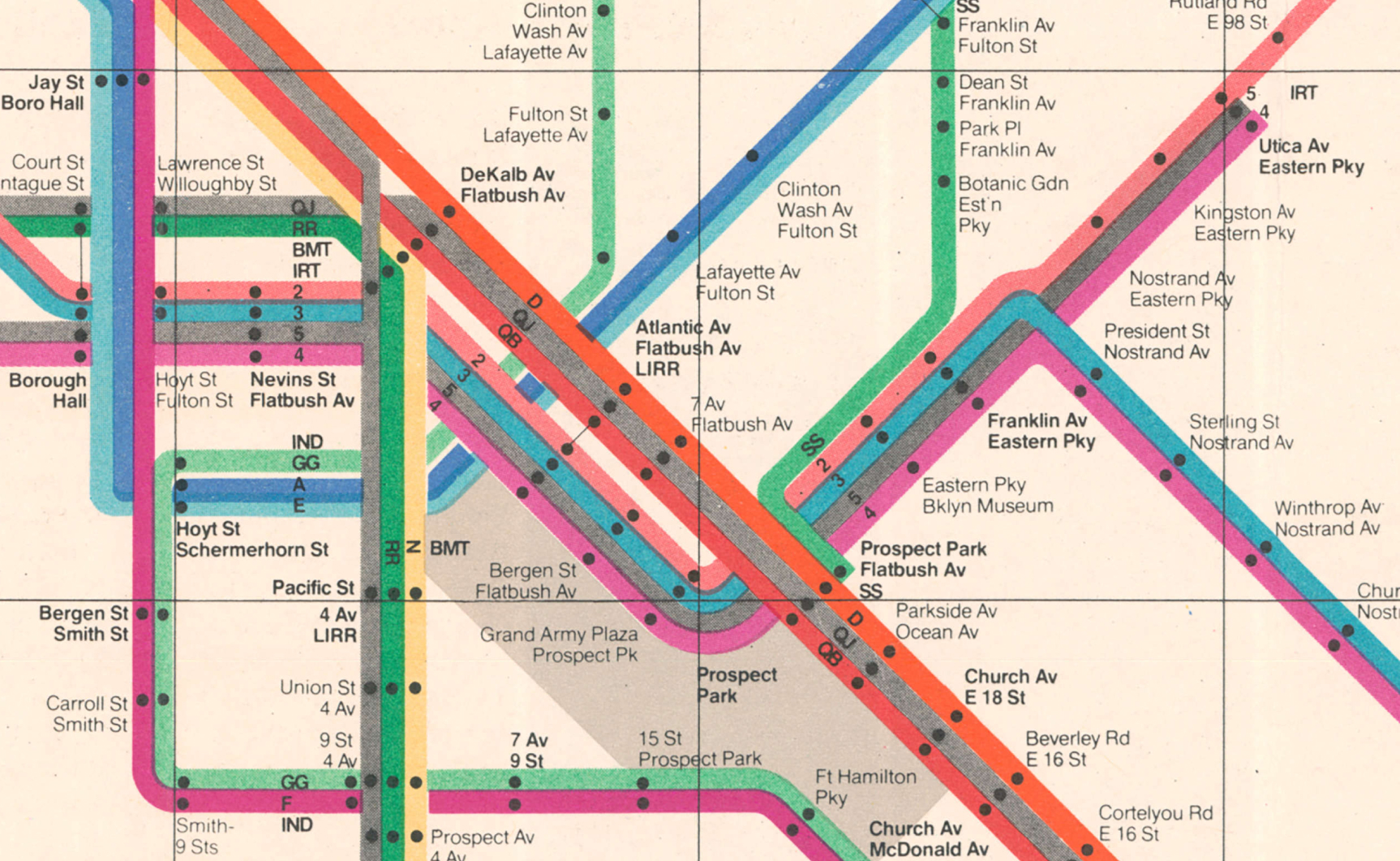
This philosophy can be seen within all of Vignelli’s works, particularly in his rendition of the New York City Subway Map. Vignelli’s map ignored geographical truths, he instead opted to simplify the map into an abstract grid system, prioritising logic and intuition over geographic realism. The map has received some criticism over the years due to this with users arguing that the map does not reflect the New York City that they know all too well. Vignelli argues that the map purpose is not to reflect reality but to help users navigate the system efficiently. I believe this to be a prime example of Vignelli’s approach to objective design, a design that will be used by millions of people everyday, with high stakes on the users end, in this scenario poor design could result in catastrophe.
Alongside objectivity, the idea of timelessness is prevalent throughout Vignelli’s work. He believed it to be a marker of good design. Rejecting trends and fleeting styles, deeming them to be distractions from the fundamental principles of design. To Vignelli, timeless design was objective. Design that transcended these passing fads and in which functionality served as the design's reasoning for existing.
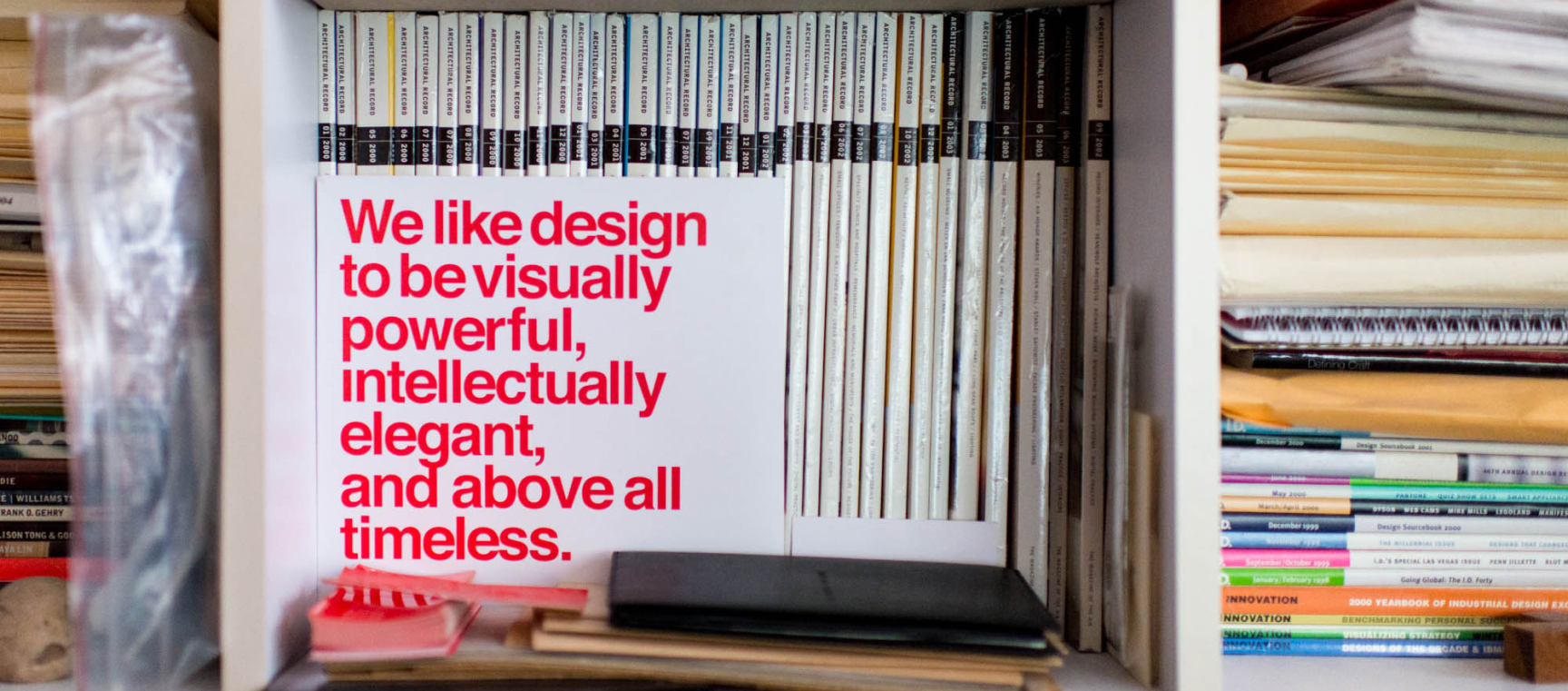
In his “Vignelli Canon” he wrote “We like design to be semantically correct, syntactically consistent, and pragmatically understandable. We like it to be visually powerful, intellectually elegant, and above all timeless.” It is this emphasis on timelessness that allows us to see Vignelli’s desire to strip design of subjectivity. By focusing on principles such as legibility and clarity Vignelli’s work is able to stand the test of time, unaffected by the ever growing cycle of trends and changing tastes.
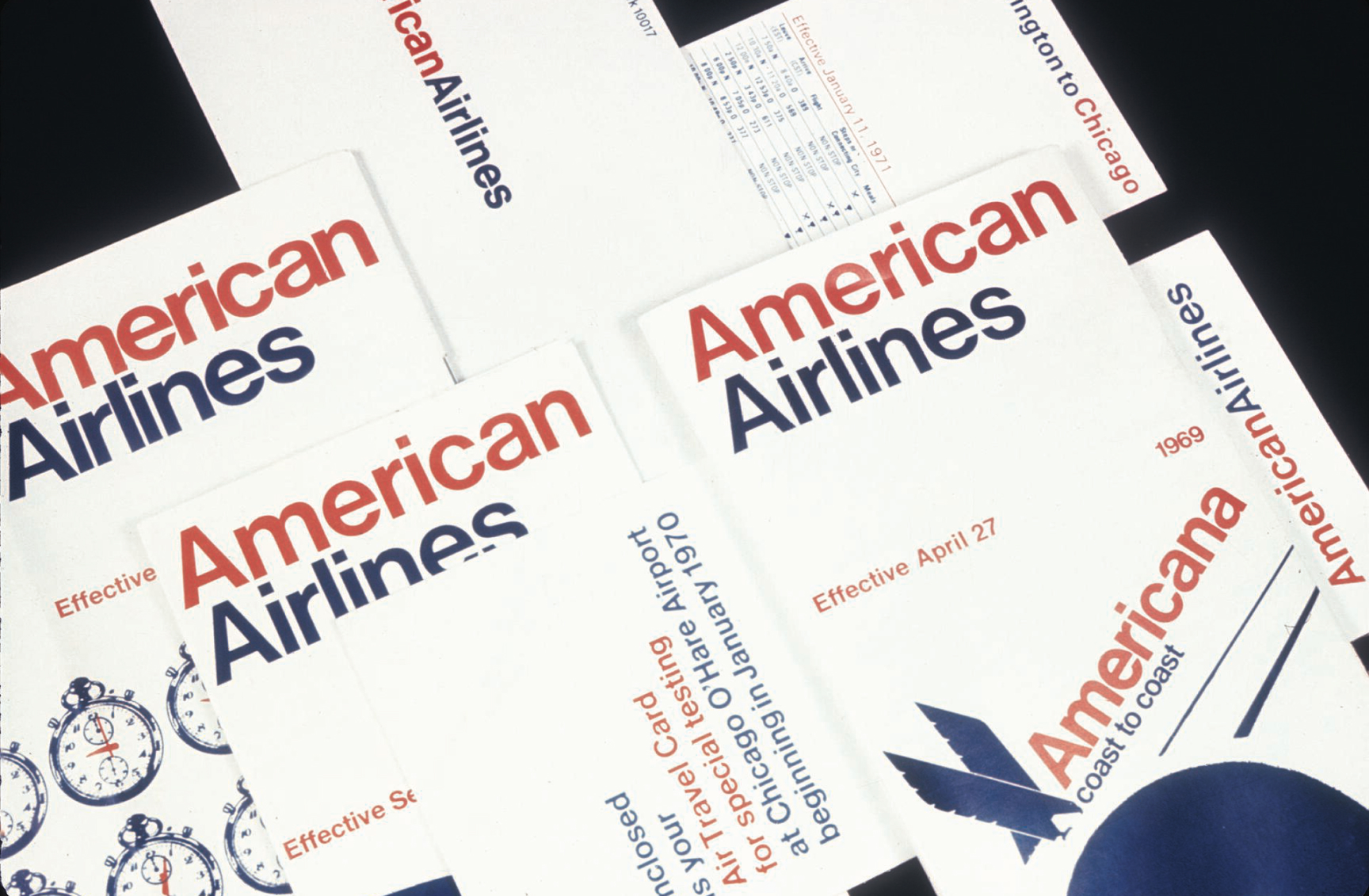
One of the best examples of this idea at work is Vignelli’s design for American Airlines. The logo, introduced in 1967 was comprised of a simple design of an eagle emblem above the companies initials paired with a clean sans serif typeface. The design remained unchanged for over four decades. A testament to not only the design but to Vignelli’s dedication to his philosophy. Vignelli’s work avoided the gimmicks of contemporary design, relying instead on a visual language that was simple and universally comprehensible.
Whilst Vignelli’s belief and dedication to objective design has inspired many and even changed design as we know it, it did not come without criticism. Critics argue that design is inherently objective, shaped by personal and cultural influences. A popular argument against Vignelli’s pursuit of timeless design is that designs deemed to be timeless simply reflect cultural values of that specific time and place. This criticism can also be applied to Vignelli’s idea of universal design, designs that communicate with each other due to the nature of their adherence to the fundamental principles of design.
Vignelli’s preference for minimalism and modernism is rooted firmly in western traditions, specifically those of the 20th century. Critics argue that in its aim for universality, Vignelli’s approach is not neutral, but rather a product of its cultural and historical context. They note that in his emphasis on rationality and structure that Vignelli loses the human in his designs. That these principles, when given so much weight, often come at the expense of human connection.
The New York City Subway map, whilst celebrated for its clarity, also demonstrates the limitations within Vignelli’s approach. Many users have found the design to be confusing, solely because it deviates from the reality of the New York that they know. It did not align with their lived experience of the city. It is here we can see an example of Vignelli losing that human connection in his pursuit of objectivity.
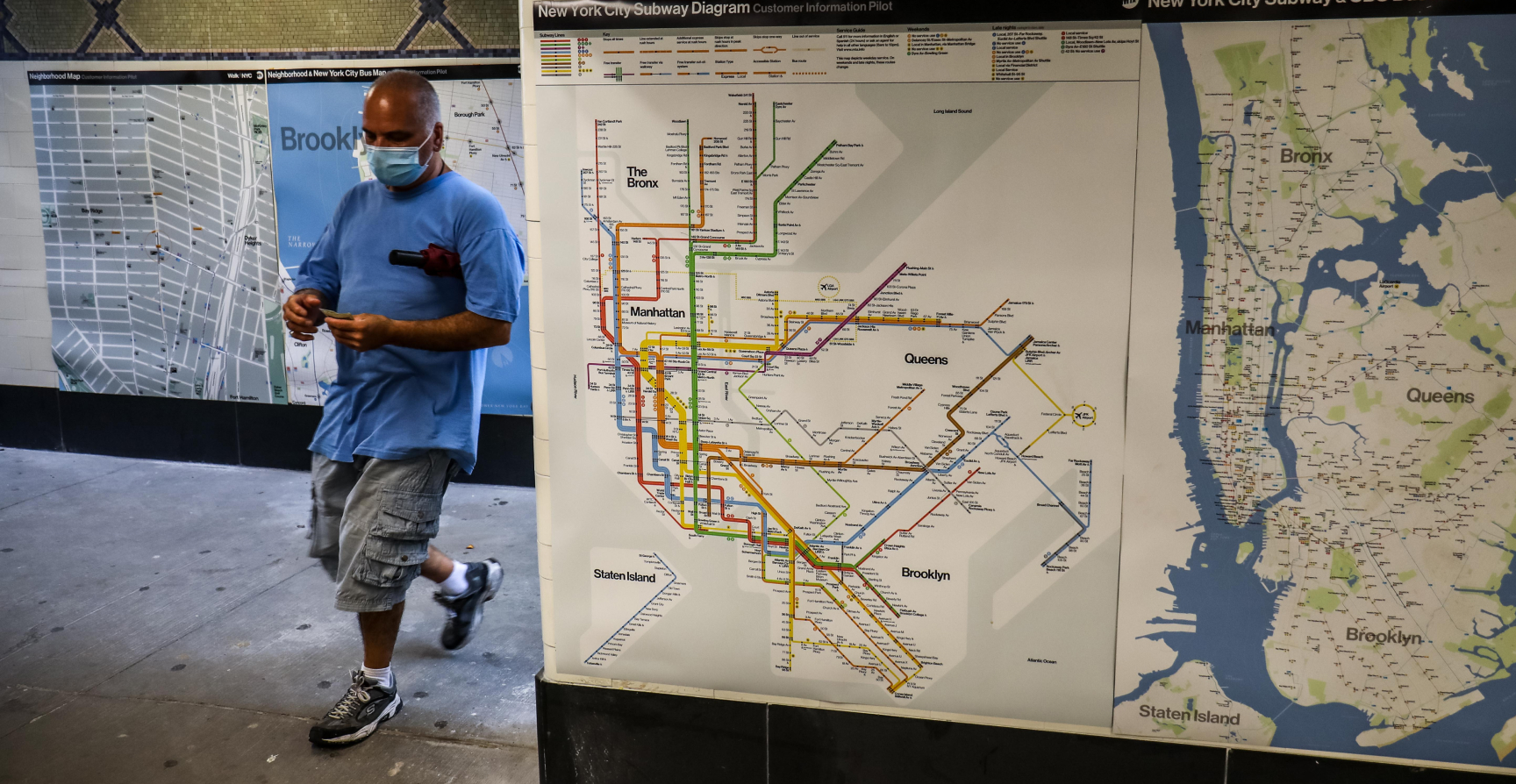
“This is Mr. Vignelli’s map, which everyone can see is an aesthetically pleasing map. And it’s made some lovely t-shirts for us at the MTA. But there is no relationship between the subway routes on this map and the city above. I’m a native New Yorker and I know what New York looks like, and it doesn’t look like this.”
John Tauranac - NYC MTA
Despite these compelling critiques, Vignelli’s approach to design offers valuable insights into the nature of design. Whilst it may be impossible to achieve true objectivity in design, Vignelli’s emphasis on clarity, function and timelessness work together to provide the framework to create designs to appeal broadly. Rather than viewing subjectivity and objectivity as rivalling forces it may be more productive to view them as complementary to one another within the design process.
Vignelli himself acknowledges this balance within his work. Whilst Vignelli championed adherence toward the innate principles of design like no other, he recognised the importance of creativity and intuition in design. In his own words “The life of a designer is a life of fight: fight against the ugliness. Just like a doctor fights against disease. For us, the visual disease is what we have around, and we try to cure it somehow with design.” This statement reflects Vignelli’s belief that designers hold not only the responsibility of following the rules but also to push the boundaries and challenge conventions when necessary.
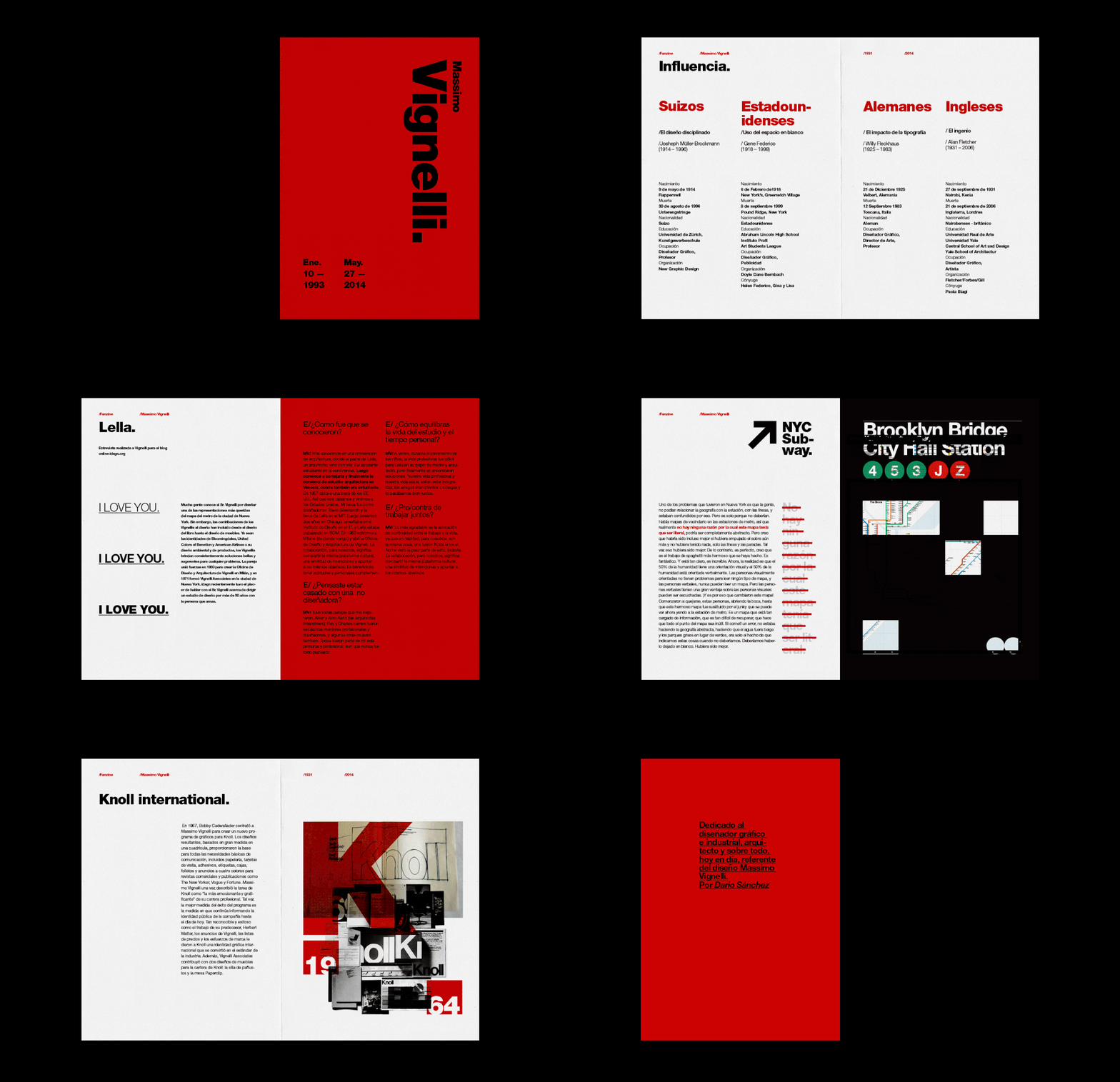
Massimo Vignelli’s contributions to design continue to influence the field to this day. Serving as a reminder of the power held in simplicity and the relevance of modernist principles. His work encourages us to think critically about our attitudes toward clarity and function over trends and personal expression.
His attitude toward design however invites the ongoing discussion of the nature of design and its relationship to objectivity. As design becomes increasingly more popular across the world, Vignelli’s pursuit of universality must grapple with the diversity of lived human experiences. Vignelli’s belief in rationality and timelessness offers a valuable foundation but it must be balanced with an understanding of the subjective and cultural perspectives of design.
In the end, the question of whether design can be objective or not may not have a definitive answer. Vignelli’s work shows us that striving for function, clarity, timelessness and purpose can elevate design beyond decoration but into a tool for communication and even connection. While personal taste will always have an impact on design, Vignelli’s work reminds us that adherence to the principles of design can guide us toward creating designs that last.
In this sense Vignelli’s design is not about achieving objectivity but aspiring to it. Vignelli’s work challenges us to look beyond our own preferences, to create designs that serve others and stand the test of time. Whether design can be objective or not, Vignelli’s vision offers a compelling case for its pursuit and for the lasting impact of thoughtful, principled design.